Saturday, 21 September 2013

Hello all! my thoughts, happenings and first article :)

It's been a couple of months that my new role as Black and Minority Ethnic officer officially began. Much has happened since then (mainly inside my head!) that I want to tell you about: I developed ideas on how to improve the multicultural education and social integration on our campus, I discussed with and met new people, I am networking to bring inspirational BME people on campus. Last week was executive training and it helped me get a clearer idea about what I want to be campaigning and working on and what I want to see happen by the end of this year. I learned a lot about cooperation and planning work with other officers and societies. Before that I went to a really insightful and lovely event organised at UCL, to support and inform BME officers across the UK.
The main thing I am doing now is working on organising events for Black History Month. I wrote an article for the Orbital and here it is! "BLACK HISTORY MONTH: IS IT ENOUGH?" is the title, find it on this blog :).
I want to promote discussion on BME topics throughout the year, so I will keep you posted on the evolution :).
I hope you enjoy the article and you can find me on facebook: https://www.facebook.com/BMERHUL and Twitter:https://twitter.com/SurhulBME  if you'd like to voice your opinion!

Luisa Violet

BLACK HISTORY MONTH: IS IT ENOUGH?

It would be appropriate to begin this article with complete honesty: this is an extensively broad question and does not have as straightforward an answer as one may think. It will be very difficult to answer within such a small space, but it can be seen as a first step towards open discussion throughout the coming year. The worthiness of Black History Month (BHM) is unquestionable. It has allowed under-represented ethnic minority groups within the UK to find pride within their own heritage and historical contributions to the British culture. It has highlighted that the history taught in our primary and secondary schools is not transparent in its inclusivity and does not fully recognise the contributions of ethnic minorities to British society to the level which it should. BHM was established in 1987 in Britain. We have certainly come a long way since refusing individuals of African and Irish descent the ability to rent a property in London. In modern Britain, we have people from ethnic minority groups occupying all levels of the social strata. They are proud to call themselves British citizens and contribute to both British culture and its history still in the making. In light of these facts, some may question the need for a BHM at all; have we not already established the level of equality and integration of all colours and creeds the month-long event set out to promote? Certainly not fast enough. Our institutional history curricula still largely exclude the contributions of ethnic minority figures. In society today, even, the repercussions of some ignorant and outdated mentalities still affect us, creating stereotypical misconceptions and, consequently, discrimination towards ethnic minorities. Nonetheless, we are in a position which enables us to learn from the past and influence the future by teaching ourselves and each other cultural understanding and inclusivity, rather than tolerance. Truthfully, like with every good thing, there comes a time for reassessment and redevelopment in order to maintain a direction towards improvement. The general approach to cultural education during BHM mainly celebrates important historical figures of African descent. Nonetheless, it is far too simplistic to squeeze numerous cultures of one ethnic group under a singular umbrella definition and into one month. Furthermore, it was the people from an array of cultural and ethnic backgrounds who devoted to the British culture and history and BHM should be a time for all peoples to recognise and learn about this. BHM should be expanded as a platform for change to build on the work done by the movements who fought early discrimination towards minorities in Britain, such as the “Self Help Movement” and every individual who contributed to evolving the British society into the state of inclusion and representation of today. So, Black History Month is not enough. Not enough because one single month isn’t fairly representing the spectrum of ethnicities whose important figures impacted the development of the British history and society. Not enough, as these figures should be remembered and celebrated not merely for one month, but throughout the whole academic year in schools across the UK. Not enough as the equality and integration it symbolizes are yet to become ubiquitous uncontested realities in Britain. The question should read ‘Black History Month or simply history?’ because this is ultimately what we should want. However, despite its limitations, BHM is an invaluable platform of opportunity for discussion, inclusion, cultural education and political reform which should aim at the development of a more inclusive and representative society in Britain. An opportunity to challenge and eradicate concepts which reiterate a gross separation such as, for example, the outdated and reductionist definitions of black and white. Instead we should address people by their culture of origin: for example, English, Ghanaian, Malaysian, half-Irish and half-Indian, Bangladeshi, Italian, Mexican, Jamaican, or more generically, Latino American, or of Asian, European or African descent. BHM should be an opportunity to reclaim the value of recognising the individuals beyond their ethnicity. Until British history and, indeed, American and worldwide history are equally representative of all the ethnicities who contributed to its progress, we need Black History Month. This is until history is defined as neither black nor white, but purely history.
LUISA VIOLET BORDOLI

Tuesday, 10 September 2013

Exec Training and the next year

I'm in exec training at the moment, and I'm certainly getting to know the other officers better
One of the exercises we've had to do is plan out the next year and how we're going to do everything we've committed to. Now, I really want Liberation Week to happen and will work towards that with Violet, Vic and Jack, but this is just the list of things from my manifesto - so here's what I'll be up to all year (alongside my degree):
If you want to help, tweet me on @SURHULDisabled or find me on Facebook or email surhuldisabled[@]gmail.com

Action
Persons responsible
What to do
Deadline
Elections
NO stickers for elections
Elections officer
Singh re budgeting
Arrange a meeting between myself and those people, propose the idea, discuss budgeting
When are the next elections? Find out when they are and do that
Election tshirts replaced with sashes
Elections officer
Singh
Note: possibly the t-shirts have already been ordered so it might need to be put in place sooner
When are the next elections? Before then
Campaign-free routes
Elections officer
Singh
Sit down in a meeting with them with a campus map and highlight routes around campus so students can get everywhere without them
Before the next elections
Safety
Mobility impaired students and Sshh bus currently as well as the future
Venue managers
Who organises the Sshh buses? Speak to them
Sidonie
College re Sshh bus funding
Arrange a meeting, and discuss a plan – can a security staff member accompany or help them home? Are there accessible taxis locally? Ring all the taxi companies to find out. 
For the future speak to the college about how they fund the Sshh bus scheme and where they get the buses from
Discuss how we could get an adapted minibus
As soon as possible
Bad weather plan for mobility impaired students, so someone can call them and check on them
Educational support office
Sidonie
Whoever runs the volunteering scheme
Contact the ESO and discuss this with them, especially for a list of mobility impaired students, contact all those students and see whether any of them want it, once we have a list of people that want to have the service, speak to whoever runs the volunteering scheme to see if volunteers can be up for it, organise it in terms of having it set up
Beginning of November – before the cold weather sets in
Mental health first-aider training
Sidonie
RAG chair
Venue manager
Performance society presidents
Research how much it costs, speak to Sidonie and RAG chair about fundraising for it, organise a fundraising event and see if performance societies are willing to perform at it
End of my term
Campaigns
Mental health week panel
Sidonie
Jamie
Discuss what night we could do it
Organise a room
Find a panel of students with different mental health problems willing to discuss them
Design posters advertising it
Mental health week – when is it?
Two week wait
Jamie
Sidonie
Counselling service at college
Find out who funds them and that person
Speak to the counselling service to see whether they can currently do this
If they can’t discuss how they could, how many more counsellors they’d need
Speak to college about getting that many more counsellors and how much it’d cost
Lobby college for the extra funding using statistics of students with mental health problems
If college refuse look into how we can campaign further to convince them
End of my term
Campus access audit
College – who is at the top in terms of venue management
Educational support office
Disabled students network
Discuss the cost of getting a professional access audit that we could then advertise online
If we can’t afford that then work with the disabled students network to divide campus up and discuss a rating scheme
End of my term
Disabled Students Allowance campaign
Jamie
Educational Support Office
Research how to apply for it, what paperwork is needed, how it works
Design posters that explain it with a point of contact for applying for it
Have an event of some kind in which it’s discussed and disabled students talk about how it’s benefited them – the ESO might recommend students who are willing to
Produce a leaflet about it
End of my term
The community
Find out what’s happening to local Mental Health services
Jamie
Sidonie
Health centre? Internet?
Local groups for people with MH problems
Be willing to work with other organisations in the local area on this, and find out what’s already happening
Raise awareness of the cuts if they’re happening
If there is no response yet, look at the kind of protest that could be arranged
End of my term, any major government bills relating to this
Engaging with the local community relating to cuts in Englefield Green and Egham to health services
Contact Save Our Services in Surrey
Other community groups
Speak to these groups
If any kind of protest is being organised look into coaches or similar
If there are major cuts and there is no protest, look into organising one
End of my term, any government bills
Accessible shower space
The Village
ESO
Contact the ESO and find out whether there are students with mobility impairments not currently living in adapted housing, and whether this might ever be wanted
Speak to The Village about their shower space, how much it costs to use, whether students could use it for free, timings
Organise for the ESO to advertise this possibility for students who might require it
End of my term
Sports
Accessible sports teams
Sports officer
Person in college responsible for sports funding
Ian
Speak to the college about the need for disabled students to have access to sports
Explain the lack of demand and the difficulty of setting up our own teams because of the variety of adapted sports and number of students
Look at what local accessible sports teams exist and how we could get students to them in terms of adapted transport
Suggest costings to the college and how important this is, and press them for funding
The end of my term
Casual sport
Ian
Sports Officer
Discuss the viability of sports teams offering to facilitate occasional casual sessions for students who aren’t so good at sport but want to do some for fun
Organise and advertise these
End of my term
BUCS and adapted sports
Hannah Paterson
Daryl Jones
Speak to Hannah about relevant contacts she might have and what’s happening with this
Contact BUCS and ask what the current situation is
Act from there
End of my term
The Union
Quiet room during union nights
Sidonie
Venue manager
Security manager
Organise the meeting and explain why this would be useful or necessary for disabled students
Discuss potential challenges and trial it
End of my term
Safe areas for mobility impaired students during union nights
Sidonie
Venue manager
Security manager
Explain why this is needed in terms of the crush
Look at the SU and which areas are easy to get to, easy to section off and might be useful
Discuss potential challenges and trial it
End of my term
Access information for union nights
Venue manager
DJs
Tech crew
Disabled students network
Find out what things the disabled students network think are important to know before venue nights
Discuss with the venue manager, tech crew and DJs how these things are planned and how far in advance
Design a sheet that can be filled in with ticks or whatever symbolising what will be present, eg strobe lights, fast moving lights, high volume music, more or less full venue, other things added or removed
Discuss how to make it policy that that sheet is displayed at the point that tickets go on sale on and offline so disabled students can be prepared for the venue night
End of my term
General meetings with access breaks every 90 minutes
This is in progress and the motion will be ready for the first general meeting
Union Chair
Discuss this with Alex Cadier
Write a motion on why this is important
Write a speech explaining this
Have a vote
First general meeting of the year
The University
Lecture notes and recordings
Educational services
VPs of the university in charge of education
Deans of departments
Explain why this is important, whether it’s recordings, transcripts or notes
Explain how this would help students to learn
Discuss ways of preventing it stopping students attending lectures
Contact other universities that already do this to see whether it’s affected their lecture attendance
End of my term
Founders’ Library access campaign
Sidonie
Whoever Sid tells me to speak to
Find out what’s happening so far with the Founders’ Library access campaign
Support and continue to look for ways of making it more accessible to mobility impaired students
End of my term
Avoiding students as learning support mentors where people want
ESO
Disabled students network
Discuss this with the disabled students network to see where it’s a problem and if it’s a problem for disabled students
Explain to the ESO why it is (if it is) – patronising, risk of friends of friends, not wanting other students to know about their issues, wanting the choice to have someone separate from the student community
End of my term
Benefits pack
ESO
Research the benefits disabled students might be entitled to
Produce a leaflet about this
Ask the ESO to distribute it
End of my term
Spaces
Disabled Students’ Network
Sidonie
ESO
Whoever does room bookings
Book a room for an evening the week after welcome week
Advertise through the ESO
Make posters
Ensure that as many students of all years as possible know it exists, and ensure that they also know who has the right to attend
Try and bring tea and biscuits and discuss when would be a convenient time and week for this to meet fortnightly
As soon as possible
Disabled Students’ Facebook group
ESO to advertise
This is already set up and needs to be advertised
-
Disabled Students’ Officer Facebook page, twitter, etc
ESO to advertise
This is already set up and needs to be advertised
-


Saturday, 31 August 2013

Disabled Students' Officer Update

This summer I've spent some time working on my DSO role, though admittedly maybe not as much as I'd have liked! It turned out that studying got in the way, and throughout my final year I will be balancing study with this role and trying not to let either of them slip!

My goals for this summer were:

"Other goals this summer include starting to work out where safe campaign-free routes across campus could go, to propose to the Demoks at the start of next year, looking into the costings of adapted vehicles, large and small, with relation to the Sshh bus and transport home for wheelchair using students, finding out how much it would cost to train a mental-health first aider, and looking into how we’d fundraise for that, doing some research into Disabled Students Allowance and hopefully preparing the leaflet on it to circulate to students, making contact with the local Save Our Services group so that we can be aware of cuts that might affect the provision of health, and especially mental health, services locally, researching local community groups that we could engage with, making contact with The Village about adapted shower usage, and linking them up with the SU and Educational Support Office if possible so that students can be aware of its availability, researching local adapted sports teams, finding out the state of affairs with wheelchair / adapted sports and BUCS, writing a motion on general meetings and access breaks, finding out what other universities do about lecture notes and how that benefits disabled students at those universities, catching up with the access to Founders’ Library campaign, get started on the pack regarding benefits available to disabled students, and setting up the facebook groups (one open to anyone who wants to work on or be involved with disabled students related issues at Holloway, and the other for disabled students at Holloway only)."
Of those, I haven't achieved as much as I wanted!

  • I've worked on safe campaign-free routes across campus, and am looking forward to sitting down with the Democracy officer and asking whether we can set those routes to be without campaigners. They're often a longer way round, which isn't ideal, but is better than nothing.
  • I haven't yet managed to sort out the bus issue - I've tracked the fact that they come via the University, and I've looked at costs of buying them, but I think the next step is to approach the university about that.
  • I've looked into mental health first aid training, and it would cost £200-300, but I haven't started looking at fundraising for that yet
  • I've done reading for the Disabled Students Allowance, and Disabled Living Allowance / Personal Independence Payments leaflets, but haven't managed to design the leaflets yet. I am a step forward on them though
  • I haven't contacted the loacl Save Our Services group
  • I also haven't contacted The Village
  • I've looked into more local adapted sports teams, and there might be some exciting news about that come September, but no promises yet. I'm also looking into asking the University for funding for disabled students to access sports
  • I haven't managed to look into adapted sports and BUCS
  • I've drafted a motion on general meetings and access breaks and would welcome feedback on it: 
"This Union Notes:-General meetings can be very long-There is currently no policy on access breaks during general meetings, and they are instead the decision of the chair
This Union Believes:-Having a regular break during a general meeting would enable people to get drinks and use the toilet without having to miss debate
-Having these breaks will make the meetings easier for people who struggle with concentration, sitting still, health problems, the intensity of the meetings, or many other issues

This Union Resolves:
-To implement a policy of access breaks
-That these access breaks should happen as soon as there has been 90 minutes of meeting time since the previous access break
-That these access breaks can be called by the Union Chair before the 90 minute point if they are deemed necessary, whether for the health of the meeting, to avoid them interrupting debate, or for other reasons
-That this does not preclude other breaks being called at any point, it simply ensures there will be one at least every 90 minutes

This Union Mandates:
The Union Chair to follow this policy"
-Having these breaks will make the meetings easier for people who struggle with concentration, sitting still, health problems, the intensity of the meetings, or many other issues
This Union Resolves:-To implement a policy of access breaks-That these access breaks should happen as soon as there has been 90 minutes of meeting time since the previous access break-That these access breaks can be called by the Union Chair before the 90 minute point if they are deemed necessary, whether for the health of the meeting, to avoid them interrupting debate, or for other reasons-That this does not preclude other breaks being called at any point, it simply ensures there will be one at least every 90 minutes
This Union Mandates:The Union Chair to follow this policy"


  • I haven't caught up with the Access Founders' Library campaign yet
  • I've been working on ways to make myself more contactable:
Twitter: @SURHULDisabled
Email: surhuldisabled@gmail.com
Facebook: https://www.facebook.com/SURHULDisabledStudents

I'm also working on setting up a group of disabled students - hopefully the ESO will send an email around about that soon.
Finally, I'm off on Monday to train People and Planet interns on how to make campus groups more accessible to disabled students.

Maybe not as much as I'd hoped, but it's been a productive summer! As always, feel free to contact me.

Saturday, 10 August 2013

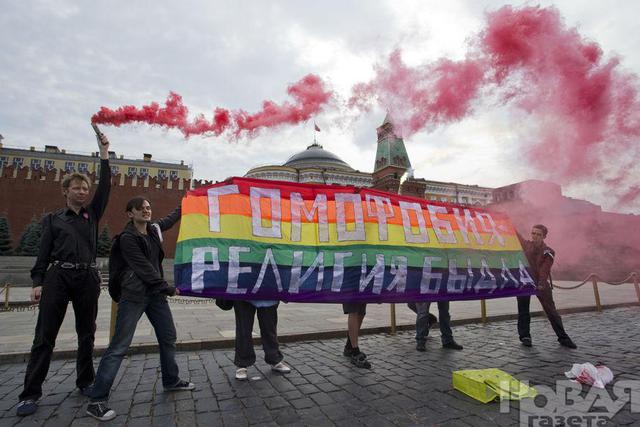
Putin: autocrat of hate

"Homophobia - religion of bullies"


The steady increase in homophobia in Putin's Russia is well-documented, but now the hate is finally gaining international attention in the run-up to the 2014 Sotchi Winter Olympics.

Last month, Putin passed a bill banning all propaganda presenting "non-traditional sexual relations" in a positive light. This was initially just for minors, but now is being used to crackdown on all gay propaganda across the whole of Russia. This means that anyone saying something as simple as "homosexual relationships are as valid as heterosexual relationships" face fines of 4,000-5,000 rubles (£80-£100). Public officials are fined 10 times that, and organisations it is £155,000-£200,000. On the internet this increases to £1000-£2000 for individuals, £2000-£4000 for public officials and £200,000 or a 90-day suspension for organisations.

It gets worse.

For foreigners, not only do you get a fine (£80-100 in real life or £1000-£2000 on the internet) but you also get deported. Yes. Deported.


This is horrendous for a number of reasons.

Firstly it institutionalises the homophobia peddled by the Orthodox Church on a federal level (similar laws have been passed in states, but nothing at the federal level before). The church has stopped pride marches from happening for the past decade as well as local authorities, such as St Petersburg, which have banned pride marches under similar legislation.

Secondly, it is another layer in Putin's autocratic rule. State lines are pushed and dissent is punished ruthlessly. This is a regression not only in terms of LGBT rights, but more widely as a return to Stalinistic bureaucratic rule.

Thirdly, this only the 'moderate' part of what Putin and his allies want in Russia. MP Alexandre Mikhailov has called for gay and lesbian people to be flogged in public squares. Putin has also banned the adoption of children by gay and lesbian couples in countries which allow same-sex marriage, but claims there is no discrimination of LGBT people in Russia.


What is to be done?

A number of proposals of action have been brought to the table, most notably Stephen Fry's call for a boycott of the Winter Olympic Games in Sotchi, Russia next year. Others have suggested Olympians carrying rainbow flags at the opening ceremony (which would result in disqualification), an illegal Olympic Pride march in Sotchi and the IOC banning Russia from their own Olympics. David Cameron has made it clear that though he opposes the new laws, he doesn't agree with a boycott.

I personally don't know what should be done. I'm inclined to agree with Cyd Zeigler that banning Russia from the Winter Games would hit the Kremlin where it hurts, and I believe that it is plausible. I also think that taking the Olympics away from Sotchi would do this too. There are plenty of other venues which would welcome the Olympics with open arms.

Whatever is done, it needs to be drastic. Homophobic attacks are increasing, such the brutal murder of Vladislav Tornovo in May (Trigger warning for graphic description of violence and rape - link).

Whatever the consensus, we must act now before the situation becomes irreparable.

Monday, 15 July 2013

We have won same-sex marriage. Now we must fight for trans* rights.

This afternoon the Marriage (Same Sex Couples) Bill passed its final stage in the House of Lords, making same-sex marriage legal in England and Wales. This is a huge victory for the LGBT movement after 20 years of campaigning. Same-sex couples can now have their relationship legally recognised on an equal footing to opposite-sex couples for the first time in British history, but this is not the final battle.

Throughout the height of campaigning for the bill, trans* people have been almost entirely erased from the discussion, most visibly by Stonewall (AKA S’onewall). Stonewall is the leading LGB rights organisation in the UK, but has had the pomposity to call this bill ‘equal’ marriage. We do not have truly equal marriage, and won’t do so for a long time. We must fight for non-binary and poly* relationships to be legally recognised in the same way.

The impact that this bill has on trans* people is complex. Before the bill, trans* people who were in a marriage or a civil partnership and wanted their affirmed gender legally recognised (for example, for pensions, or simply to help with dysphoria) by having it changed on their birth certificate, were forced to end the marriage or civil partnership, get the Gender Recognition Certificate (GRC) (which changes the birth certificate), and then enter into the “other” form – the option of “marriage” or of “civil partnership” permitted to the affirmed gender of the individual. For a GRC to be issued, the trans* person has to be living as their affirmed (binary) gender for two years, which implies to a reasonable degree of certainty that their spouse would be aware of their transition. Now, instead of a divorce, for the GRC to be issued and the trans* person to have their birth certificate changed, the spouse has to consent to their partner being granted a GRC and the conversion of the union between opposite and same sex. This form of consent requires a statutory declaration signed in front of a solicitor, which also costs money.

Given that 51% of trans* people who come out to their partner or spouse can expect a negative reaction in the long term, 29% of trans* people stated that their spouse has made getting a divorce difficult, and 44% of partners and spouses have actively attempted to prevent their trans* partner from transitioning*, this creates a situation in which trans* people are at a high risk of having their access to being legally recognised as their affirmed gender blocked by a partner, possibly even a partner that they are trying to divorce.

Worst still, some have claimed that this is the final frontier of queer rights and that we are now equal. This is not the case. LGB and T people are still the subject of some of the most violent attacks in the UK.

In June 2012, gay teenager Steven Simpson was burnt to death for being gay and autistic at his 18th birthday party by Jordan Sheard. Sheard received just 3 ½ years imprisonment for Steven’s murder. Sheard’s lawyer described it as “the result of a criminally stupid prank that went wrong in a bad way.” The verdict of manslaughter was widely condemned; however nothing further has come of it.

Lucy Meadows was a school teacher who was hounded by the right-wing press for being a trans woman. On 19th March, Lucy was found dead in her home after committing suicide. The response from the press, primarily the Daily Mail and its bigot-in-chief Richard Littlejohn, was entirely unapologetic. This is just one of a string of transphobic attacks in recent years.

These deaths are a call to arms for the fight for true equality. Same-sex marriage is limited and will do little to curb this trend of violence against queer people. Fighting homophobia, biphobia and, most of all, transphobia should be the priority in our movement over the coming years.

Jack (LGBT+ officer) and Matt (Disabled students officer)

Saturday, 6 July 2013

Self-definition and Disability

Like the other liberation strands, self-definition is a complex phrase here. Do I consider myself disabled? I don’t know. Not in the sense of “being disabled is a part of my identity”, in the way that the fact that I’m a guy, or the fact that I’m bisexual is, certainly. However, in the sense of “I logically know I am disabled” then yes, I do. How, therefore, do we define who “is” a disabled student – if we say “those who self-define as disabled” we run the risk of excluding people who are disabled but wouldn’t consider themselves that way, like, to some extent I don’t. If we use a legal definition of “disabled” we run the risk of excluding the same people that the law excludes, and also the risk of people not seeing themselves as “disabled enough” to be a part of it.

What I’ve seen the University of York Disabled Students Network doing, and what I think is great, is using the following definition “those who self-define as disabled, who meet the legal definition of having a disability, or have reason to access or consider accessing disability support services during their degree”. I’d say that’s a good way of looking at it, and includes as many people as possible within the label, so that’s the one I’m going to use in terms of advertising the Disabled Students Network (when I set it up), and in terms of focussing my work.

However, it’s still more complex than that. When people think “disability” they tend to think “wheelchair” (which my presence probably doesn’t help with), but actually conditions that are disabling can be far more varied than that. Learning impairments, difficulties and differences such as dyslexia, dyspraxia, dyscalculia, autistic spectrum conditions, ADHD, and related, mental health conditions such as depression, eating disorders, psychotic disorders, personality disorders, and more, sensory impairments such as visual or auditory impairment, physical impairments or those that affect energy levels such as fibromyalgia, chronic fatigue syndrome / ME, diabetes, epilepsy, neurological conditions in general, autoimmune conditions in general, such as lupus or Ehlers Danlos Syndrome, the list could go on for hours and I still wouldn’t mention everything. It’s a vast group of people with very different needs, but it’s also a group of people that is consistently underrepresented, and that faces under-access to university, higher financial costs for being at university, and a rising rate of discrimination in society.

As a result, if you feel like you fit the definition I gave above (which includes self-defining), feel free to contact me, or come along to events once the new term starts and they get organised. If you’re not sure if you fit or not, feel free to email me (I’ll put my address up once I have it) or comment here, and we’ll talk about it. If you want to get on board and help, definitely contact me!


Matt